AP.
Tankless water heater · Ahwatukee, AZ
Tankless Water Heater | in Ahwatukee, AZGas line, venting and scale in hard water: what to check
The first sign is usually a shower that runs hot, then lukewarm, then cold, or a unit that flashes an error and shuts off. Tankless heaters fail in different ways than tank heaters, and Ahwatukee's hard water, which Phoenix puts between 10 and 17.6 grains per gallon, is the first thing to rule in.
Call (480) 806-2944 ›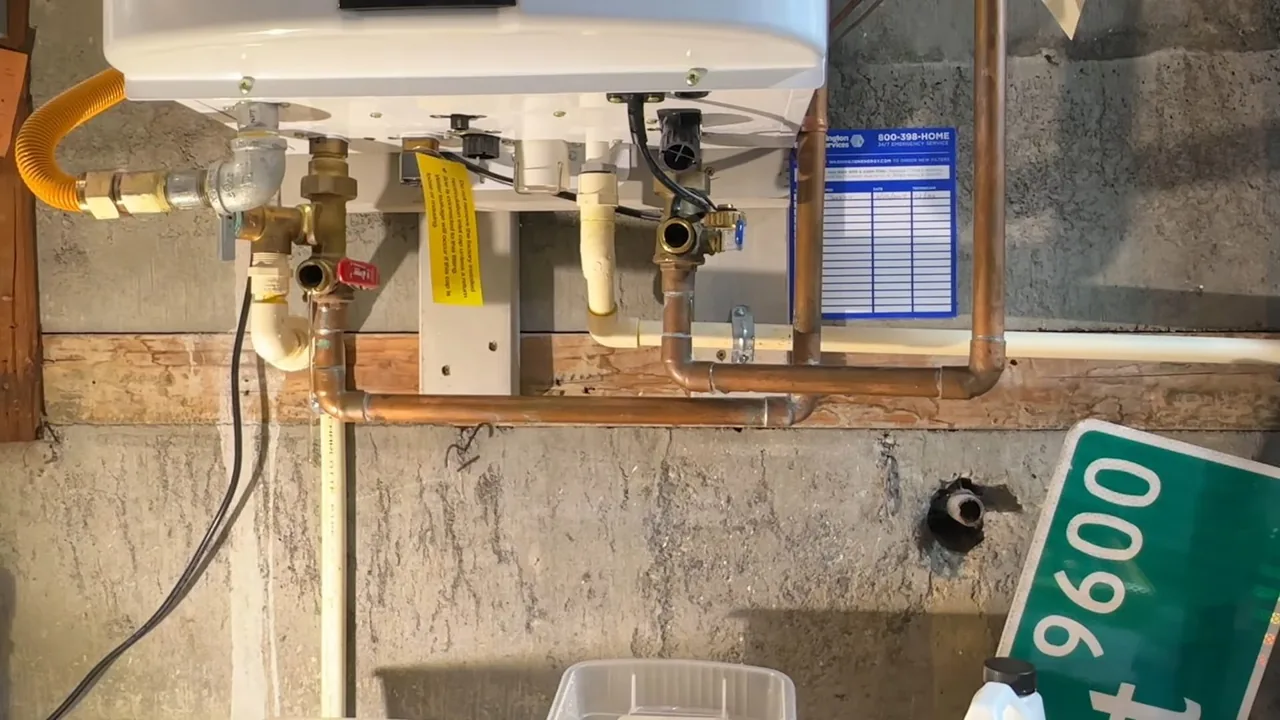
Tankless water heater repair: error codes, cold bursts and lukewarm water
Troubleshooting a tankless unit starts from the fact that it heats water as it flows, so its problems show up as changes in temperature rather than an empty tank. The table matches common complaints to likely causes. An error code on the display narrows the list, and the unit's manual names what each code means.
| Complaint | Probable cause | What to check first |
|---|---|---|
| Hot water turns lukewarm or fluctuates | Scale on the heat exchanger, a partly blocked inlet filter or a flow that is too low to fire the unit | Check the inlet screen, and ask whether the unit has been descaled. |
| A cold burst between hot water, sometimes called a cold sandwich | Short gaps in flow, or a recirculation setup that mixes cold water back in | Note how long the gap lasts and whether it follows a fixture. |
| The unit shuts off with an error code | A venting, ignition, flame sensor or overheating fault | Record the code and clear nothing until the plumber asks. |
| No hot water, and a gas unit shows nothing | Gas supply, ignition, or a blocked vent | If you smell gas, leave and call the gas utility or 911. |
| Popping or rumbling from a gas unit | Scale on the exchanger, with steam forming under it | Note it for the descaling discussion. |
Many tankless problems are maintenance problems in disguise. The fix is often a descale and a cleaned filter rather than a new part, which is why the next section matters here more than in many cities.
Flush and descale a tankless heater in hard water
Descaling means circulating a descaling solution through the heat exchanger with a small pump and two hoses connected to the unit's service valves, then flushing it clear. It removes the mineral coating that makes the unit work harder and fire less evenly. How often it is needed depends on the hardness and on how much hot water the household uses, and the manufacturer's maintenance guidance sets the baseline.
A unit that has never been descaled may need more than one pass. Ask what the plumber found at the service valves and whether the inlet filter was clogged. If scale returns quickly, a softener or filter upstream, discussed under softener and filtration choices, protects the exchanger.
Unsure whether your unit is due for descaling? Ask the dispatcher.
Call the dispatch line: (480) 806-2944Tankless water heater installation: gas or electric, and can the line carry it?
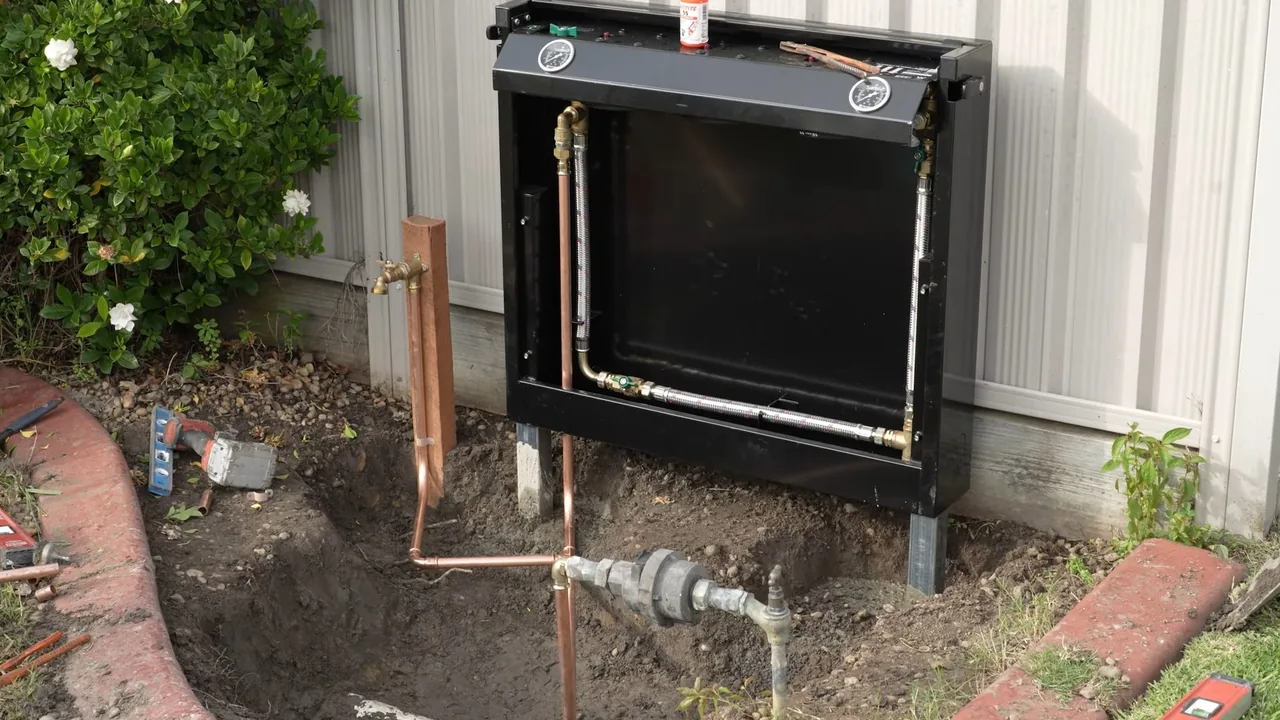
Installing a tankless heater is more than swapping a box on the wall. A gas unit often needs a larger gas line than a tank heater, a vent made for its exhaust and a drain for condensate if it is a condensing model. An electric unit draws a large current and may need electrical work that an electrician handles. The table compares the two.
| Question | Gas unit | Electric unit |
|---|---|---|
| What it needs | Gas line sized for the unit, a vent and combustion air | A dedicated high-capacity circuit and breaker |
| Permit question | Gas piping changes are permitted work in Phoenix | Electrical permits are a separate trade; ask the electrician |
| Ask about | Condensate drain, vent path and clearances | Whether the panel can carry the load |
| Typical risk | Undersized gas line starving the unit | Voltage drop or tripped breakers at high flow |
Replace or convert: what moving from a tank involves
Conversion from a tank heater to tankless changes the space as well as the heater. The old vent, drain pan and any floor space are no longer needed in the same way, and the wall that takes the new unit has to carry it. Ask what is removed, what is patched, who handles a gas or electrical upgrade and how the work is documented.
Compare the plan with a like-for-like swap on the replacement page, and remember that City of Phoenix treats a straight swap by a licensed contractor differently from a change.
Tankless or tank, and does the brand matter?
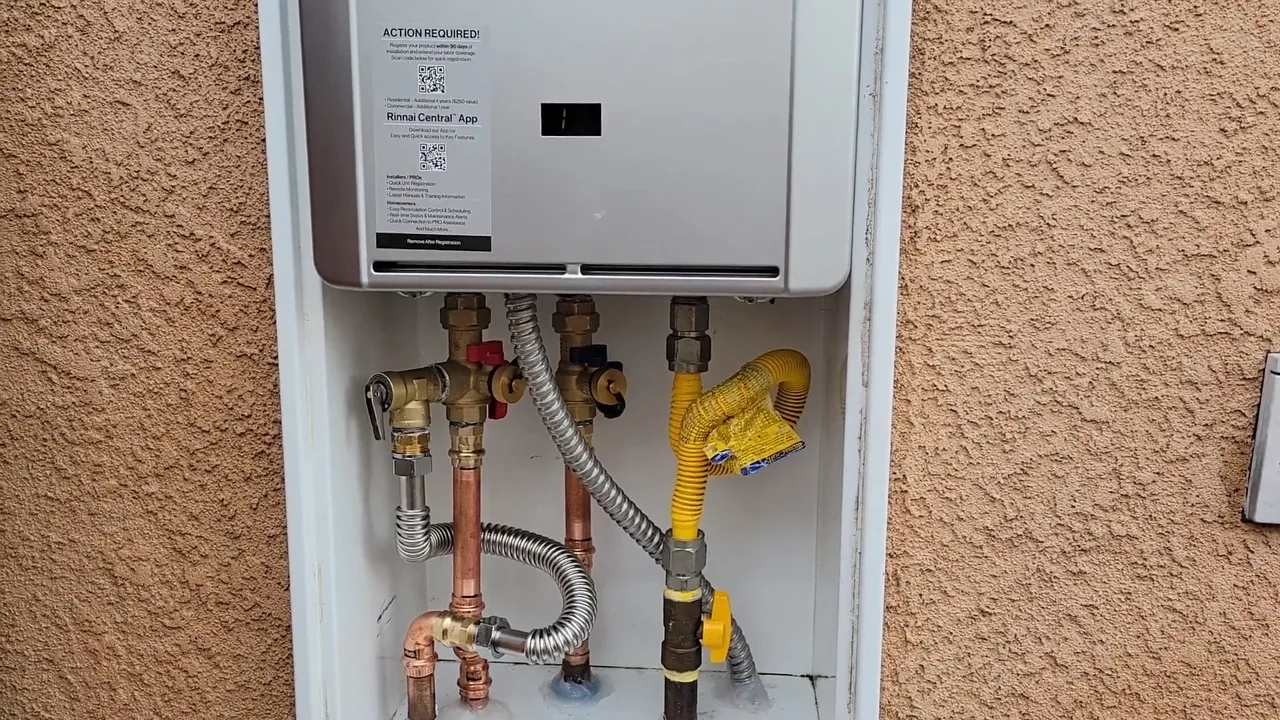
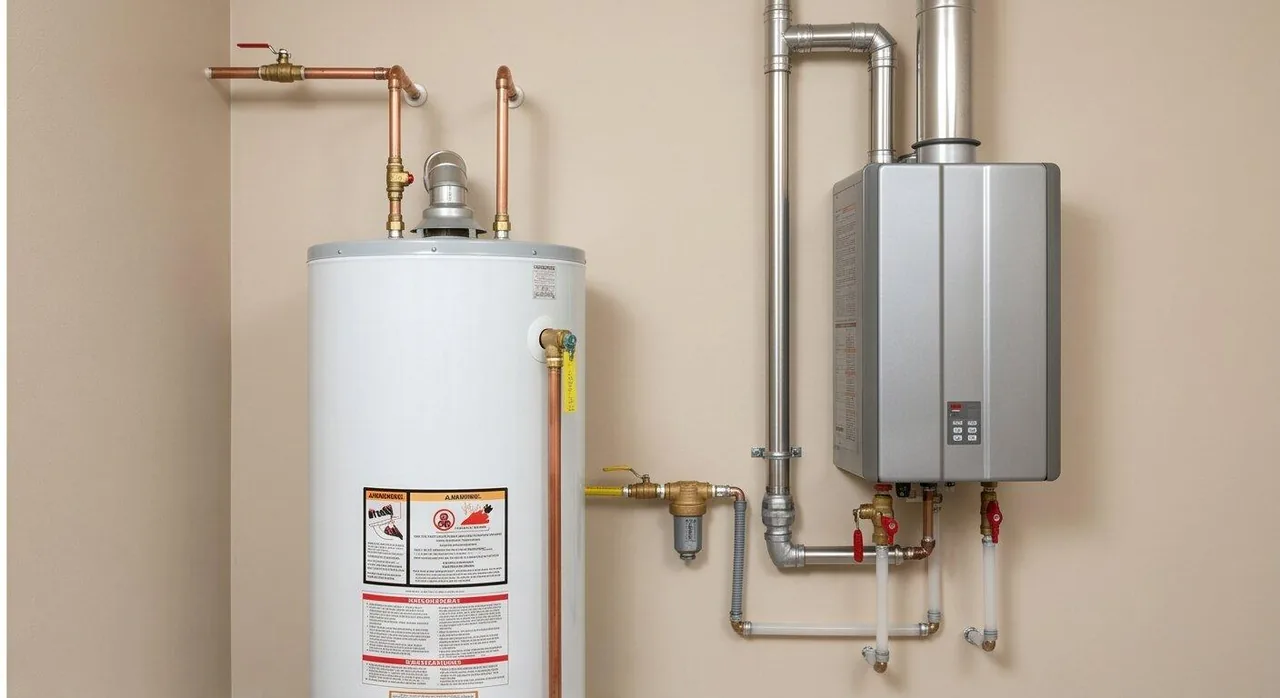
A tankless heater stores no hot water, so it does not run out, but its flow rate limits how many fixtures it can serve at once. A tank holds a reserve and recovers over time. Neither is a clear winner for every house. On brands, ask about parts availability in the Valley, the length of the maker's warranty on the exchanger, and whether the plumber services that model regularly.
Keeping a maintenance record for the unit
A tankless heater rewards a simple log. Write down the install date, the dates of each descaling, the inlet filter cleanings and any error codes with the date they appeared. When a plumber sees a pattern, such as a code that returns a few weeks after each service, the diagnosis is faster. The log also shows a manufacturer or a buyer that the unit was maintained.
Tankless water heater questions answered
What is a tankless water heater and how does it work?
It heats water on demand with a gas burner or electric elements as water flows through, instead of keeping a tank hot. When a tap opens, a flow sensor starts the heating. It cannot run out of hot water, but its capacity limits how many fixtures it can supply at once.
Is tankless better than a tank heater?
Which is better varies with the house. Tankless saves floor space and gives continuous hot water, while a tank costs less to install in many homes and does not need a larger gas line or circuit. Ask the plumber to compare both for your fixtures and your gas or electrical capacity.
Does the brand of a tankless heater matter?
It matters for parts, support and warranty terms more than for the first year of use. Ask whether the plumber services the model and whether parts are stocked locally. Ask for the warranty on the heat exchanger in writing.
How do I flush and descale a tankless heater?
A plumber connects a pump and hoses to the unit's service valves, circulates descaling solution through the heat exchanger and flushes it with clean water. With hard water the maintenance schedule matters, so ask how often yours should be done and have the date recorded.
Tankless heater giving up? Call the dispatch line.
Say what the unit shows, whether it is gas or electric and what stopped working. A plumber serving your area is routed to the address, and license details are available on request before work begins.
Call (480) 806-2944