AP.
Garbage disposal · Ahwatukee, AZ
Garbage Disposal Repair | in Ahwatukee, AZJam, hum or leak: sort out which, then repair or replace
Repair or replace, now or later? That is the question a failed garbage disposal puts to you, and the answer depends on what failed. A jam is a ten-minute fix, a dead motor usually is not, and a leak from the body means a new unit. This page helps you tell the three apart and gives you the safe steps to try first.
Call (480) 806-2944 ›
Garbage disposal repair: jam, motor or leak?
A disposal fails in three ways, and the sound and the sink tell you which. The table lists the signs and what to try. It also shows when to stop.
| What happens | Likely problem | What to try first |
|---|---|---|
| A low hum when you switch it on, but the blades do not turn | A jam: something is stuck between the blades | Switch off the power, then use the hex key socket under the unit to turn the blades back and forth. |
| Nothing at all, no hum | A tripped reset, a dead outlet or a failed motor | Press the red reset button on the base and check the breaker. If it trips again, stop. |
| Water at the base or the side of the unit | A failed seal or a cracked housing | Dry it and run water for a minute to see where it starts. A leak from the body means replacement. |
| Water under the sink at the top of the unit | A loose mounting ring, flange or sink gasket | Tighten the ring. If it still drips, the flange seal needs redoing. |
| A clogged or backed up sink when the disposal runs | A clog in the drain line past the unit | Stop running it and see the drain section below. |
Garbage disposal leaking: where the water comes from
Find the source with a dry towel and a flashlight. Dry the unit and the pipes, then run water into the sink while you watch. A drip at the top between the sink and the unit is the flange or its putty seal. A drip at the side is the dishwasher inlet or the drain elbow, both of which can loosen. A drip at the bottom or from a seam is the housing. The first two are repairs, and the last is a failed unit.
A leak under the sink is rarely harmless. Water that reaches the cabinet floor soaks the wood and can spread behind the baseboard. If the cabinet floor has swelled or smells musty, tell the plumber when you call and read the notes under drying out a soaked cabinet.
Dishwasher connection and the knockout plug
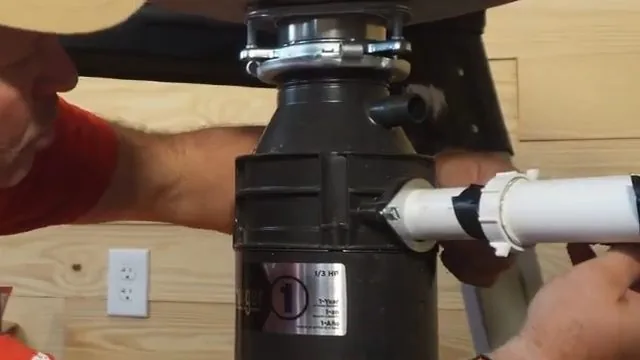
Dishwasher plumbing and a disposal usually share a drain. The dishwasher hose connects to a nipple on the side of the disposal, and on a new unit that nipple is blocked by a knockout plug that has to be removed. If the dishwasher does not drain, or water appears from the connection, check the plug and the clamp before blaming the dishwasher. A missing plug on a new unit is a common cause of a dishwasher that will not drain.
The reset button, the breaker and the hex key
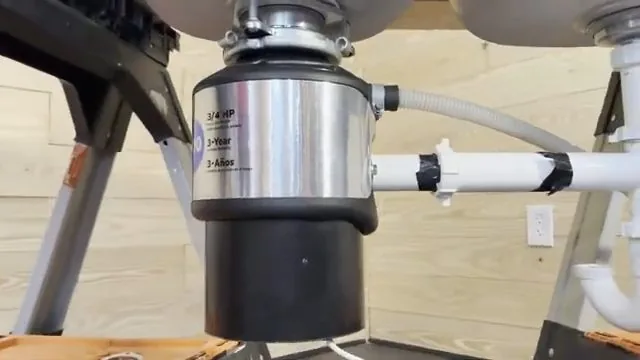
Three small parts solve most dead-disposal calls. The reset button on the base trips when the motor overheats, and pressing it after a few minutes often restores power. The breaker or a switched outlet may have tripped, so check both. The hex key socket in the center of the base lets you turn the blades by hand to loosen a jam. Keep the key in the cabinet, since the one that came with the unit is easy to lose.
Garbage disposal replacement: when repair stops paying off
Replace the unit when the housing leaks, when the motor has failed, or when it jams repeatedly. A new disposal mounts on the same sink flange in most kitchens, which keeps the job short. Ask the plumber about the horsepower and the grind stage that suits the household, about a continuous-feed or a batch-feed model and about the sound insulation. A larger motor handles more, but a well-matched unit lasts as long and runs quieter.
A disposal needs power. It plugs into an outlet under the sink or is wired directly to a switch. Wiring is electrical work, and the plumber should say so when the unit is hard-wired. Replacing a disposal is a replacement of an existing fixture, and the City's guidance on fixtures treats swaps differently from new installations, so ask whether any permit rule applies in your case.
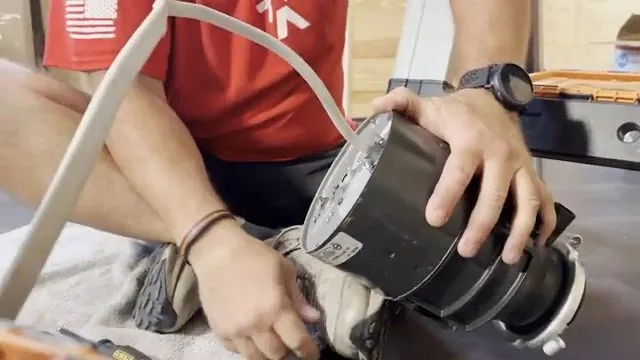
What the plumber should confirm before the new unit goes in
Ask what is being reused and what is new: the sink flange, the mounting assembly, the drain elbow, the dishwasher connection and the power cord. Ask whether the existing trap and drain arm are in good shape, since a new disposal on a corroded drain only moves the leak. Finally, ask for the old unit to be removed, the cabinet floor to be left dry and the unit to be run with water before the visit ends.
Why drains clog again after a disposal repair
A repaired disposal does not clear the pipe past it. Grease, starchy scraps, coffee grounds and fibrous peels pass through the unit as a fine paste and coat the pipe wall below it. Over weeks the paste narrows the line and the sink slows. If the clog returns soon after a repair, the cause is in the drain, and the answer is a cable or a jetting pass, as described under kitchen sink drains.
If the blockage lies beyond the house wall, the line is the owner's to maintain. Phoenix puts upkeep of the private sewer pipe, from the house to the City main, on the owner, so a backup that keeps returning at the kitchen sink deserves a camera look before another disposal repair.
- Run cold water for a few seconds before, during and after use.
- Feed scraps in gradually, not in one load.
- Keep grease, oil, coffee grounds, eggshells, pasta, rice and fibrous peels out of the unit.
- Clean it by grinding ice and citrus peel occasionally, and wipe the splash guard.
- Never pour chemical drain cleaners into a jammed disposal.
Garbage disposal questions answered
Who fixes garbage disposals?
A plumber does, and the dispatch line routes your call to one serving your area. A plain jam can be cleared by the household with the power off, but a leak, a dead motor or a hard-wired unit is plumber or electrician work. Ask for license details before work begins.
Why is my disposal humming but not spinning?
A hum without spinning means the motor has power but the blades cannot turn, usually because something is lodged between them. Turn off the power, use a hex key in the socket on the base to turn the blades back and forth, remove what is stuck with tongs and press the reset button.
Why does my sink back up when the disposal runs?
The water has nowhere to go, usually because the drain line past the disposal is partly blocked. The disposal grinds the waste, but a narrowed pipe cannot carry it. Stop running the unit and ask for the line to be cleared.
What should never go down a garbage disposal?
Grease and oil, coffee grounds, eggshells, pasta and rice, fibrous peels such as celery and corn husks, bones and anything that is not food. These coat or jam the blades or settle in the pipe. A disposal is for soft scraps, not for everything that comes off a plate.
Disposal humming, jammed or leaking? Call the dispatch line.
Tell the dispatcher what the disposal does and where the water shows up. A plumber serving your area is routed to the address, and license details are available on request before work begins.
Call (480) 806-2944